
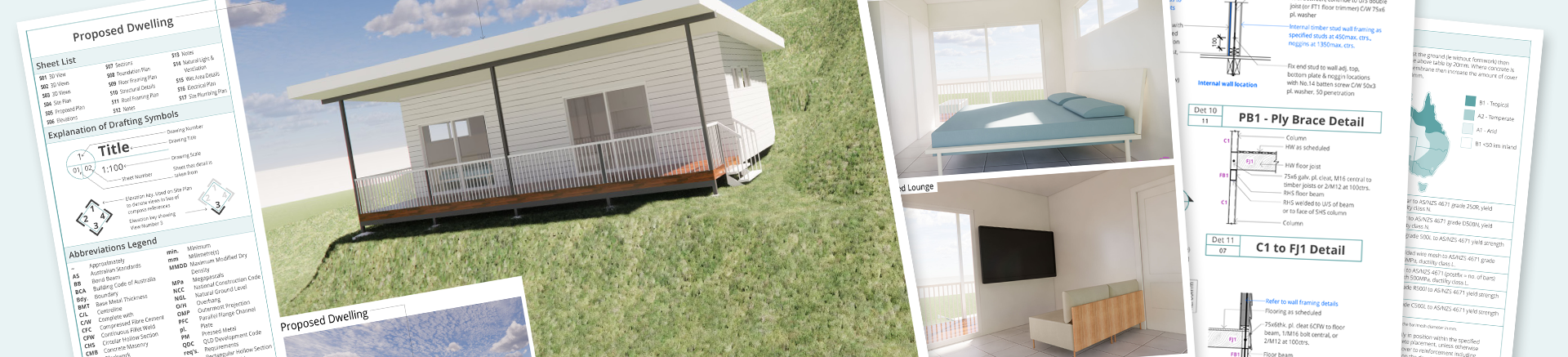
Dreaming big about living small?
Australia's housing squeeze is real, and the cost of building keeps climbing. More and more Far North Queenslanders are looking at tiny homes as a smart, affordable way to own their own space, add a second dwelling, or downsize without giving up comfort. Done properly, a tiny home is one of the best value-for-money builds going around.
WANT TO BOOK A FREE 15 MINUTE CHAT?
You can Schedule a catch-up by clicking on the 'Schedule time with Calendy' button in the bottom right corner of this page.
OR JUST CALL US...
Call
0429 805 068 now!
THINKING OF BUYING AN IMPORTED TINY HOME?
Talk to us first. A lot of the cheap units on the market can't actually be approved to live in here, and a quick review before you buy can save you a very expensive mistake.
WHY BUILD WITH US?
We design and structurally certify tiny homes to the National Construction Code - not just to look good on a brochure. That means your home is Engineered for our North Queensland conditions and will stand up to building certification.
If you're a Building Certifier or Builder, we can connect you with the right people. And if you've been quoted a bargain imported tiny home, talk to us before you commit.
WHY GO TINY?
There's a lot to like about living small:
- Lower build cost - less material, less labour, a smaller footprint.
- Lower running costs - less to heat, cool, clean and maintain.
- Faster to build - you can be in your home sooner.
- A second income, or a place for family - a compliant tiny home can work as a granny flat or secondary dwelling.
- A smaller environmental footprint - less land, less energy, less waste.
- Flexibility - fixed to the land or built to be moved, depending on your needs.
DO TINY HOMES STILL HAVE TO MEET THE NCC?
Yes. If your tiny home is fixed to the land and used as a place to live, it's treated as a dwelling and must comply with the NCC (National Construction Code), just like any house. That includes a minimum ceiling height of 2.4 metres in habitable rooms, proper structural design, weatherproofing, energy efficiency and more.
A tiny home on wheels is usually classed as a caravan and governed by different rules — but as soon as you set it up, connect services and live in it, council and plumbing approvals generally come into play. We can help you work out exactly which path applies to your block.
WHAT'S THE CATCH WITH CHEAP IMPORTED TINY HOMES?
A lot of the budget tiny homes on the market — particularly those imported from overseas — are built to fit inside a standard shipping container so they're cheap to transport. The problem is that a container isn't tall enough to give you a compliant 2.4 metre ceiling, so many of these homes simply can't be approved as a habitable dwelling in Australia.
On top of that, they're often not designed for our cyclonic wind region, and may not meet Australian Standards for structure, electrical or energy efficiency. If it looks too cheap to be true, it usually is.
The good news? We can review a design before you buy and tell you honestly whether it can be made compliant
FIXED, OR ON WHEELS?
There are two broad paths, and they're treated very differently:
Fixed to the land — treated as a dwelling. It needs building approval, plumbing approval, and sometimes planning approval, but it gives you a permanent, fully compliant home.
On wheels — treated as a caravan, and limited to road-legal dimensions (around 2.5 m wide, 4.3 m high and 12.5 m long). More flexible to relocate, but the rules around living in one permanently vary from council to council.
We'll help you choose the right path for what you want to achieve, and point you to the right approvals.
WHAT TYPES OF TINY HOMES DO AKTIV DESIGN?
We can design tiny homes in a range of materials and configurations:
- Steel-framed tiny homes
- Timber-framed tiny homes (designed to AS 1684 where applicable)
- Homes on a fixed slab or pier-and-bearer footing system
- Homes built on a road-legal trailer
- Granny flats and secondary dwellings
- Whatever the style, we engineer it to suit your site.
WILL IT SURVIVE A CYCLONE?
Far North Queensland sits in one of the highest wind regions in the country, and a small, lightweight building can be especially vulnerable to wind uplift. We design every tiny home with the right structural connections and tie-down for our region, so your home stays exactly where it's meant to be when the weather turns.
This is one of the biggest things the cheap imports get wrong - and one of the easiest ways to end up with a home you can't insure.
WHAT STEPS ARE INVOLVED?
There are 3 steps in the process:
- We develop Structurally Drafted & Certified Plans with a Form 15 (we assist with this upfront design stage).
- You obtain Building Approval through an Independent Building Certifier (separate to us, but we can put you in touch with one as required), along with any plumbing or planning approvals your council requires.
- Construction takes place, with the Building Certifier inspecting at hold points during the build.
HOW BIG CAN A TINY HOME BE?
A tiny home is generally around 50 square metres or less. Many councils treat a secondary dwelling or granny flat up to a set size more simply than a full house, but the exact thresholds depend on your council and your block - so it's worth checking before you lock in a design. We can help you make the most of every square metre.
WHAT NEXT?
Before you buy an off-the-shelf or imported tiny home, get the design reviewed. Confirming it can meet the 2.4 m ceiling height and our wind region before you pay is far cheaper than finding out afterwards.
Think about your block early. Soil type, slope, setbacks and access for delivery all affect what's possible — and what it costs.
Planning to rent it out or house family? Talk to your council about secondary dwelling and dual occupancy rules before you start. We can help with this too.
If you want to, you can browse our Portfolio section that shows our range of expertise. If you like what you see, get in contact with us by calling now!
You can also email us at:
daniel.post@aktivengineering.com.au or steve.grady@aktivengineering.com.au
WHAT ELSE DO WE DO?
As well as doing retaining walls, we also do...
- Granny Flats
- New Builds
- Additions and Extensions
- Renovations
- Carports
- Garages
- Sheds
- Patios
- Decks
- Retaining Walls